How a spider is put together
Two body parts, eight legs, usually eight eyes and no way to chew. Here’s what makes a spider a spider.
Not an insect
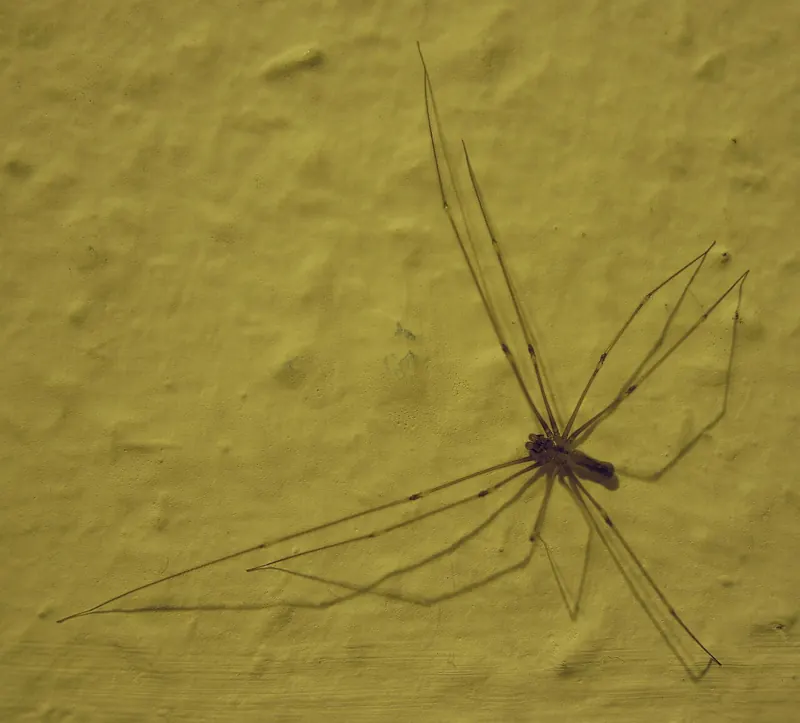
Spiders are arachnids, not insects. They have eight legs instead of six, and a body in two parts instead of three. Britannica: Spider Spiders have four pairs of legs (insects have three), two main body sections (insects have three), no wings, and simple eyes rather than an insect’s two compound eyes. British Arachnological Society factsheet: Essential spider info
Spiders and insects are both arthropods, the biggest group of animals on Earth, with hard outer skeletons and jointed legs. Australian Museum: Spiders ‘Arachnid’ doesn’t just mean spider. There are 11 orders of arachnids, including scorpions and ticks; spiders are just one of them. Burke Museum, Seattle: Spider myths (by its spider curator)
Two body parts
A spider’s body is in two sections: the cephalothorax (head and thorax together, with the eyes, mouthparts and legs) and the abdomen, joined by a slim waist called the pedicel. Australian Museum: Spider structure
The abdomen carries the spinnerets that spin silk, and the breathing organs, called book lungs. Australian Museum: Spider structure Book lungs are made of thin, leaf-like plates, like the pages of a book. Australian Museum: Spider structure
Most spiders have four or six spinnerets. Australian Museum: Spider structure
Eyes
Spiders usually have eight eyes (some have six or fewer), but few have good eyesight. Most feel their way by touch, vibration and taste. Australian Museum: How spiders see the world Wolf spiders and jumping spiders are exceptions: they have remarkably sharp eyesight for spotting prey. British Arachnological Society factsheet: Essential spider info
Jumping spiders hunt by day, using excellent eyesight to spot prey and recognise mates. Australian Museum: How spiders see the world Ogre-faced spiders (Deinopis) have two hugely enlarged rear eyes that work like searchlights for seeing at night. Australian Museum: How spiders see the world
At night, wolf spiders’ eyes shine brightly in torchlight. Australian Museum: How spiders see the world
Legs and palps
Spiders bend their legs with muscles but stretch them out mainly by raising their blood pressure. Australian Museum: Spider structure That’s why a dead spider’s legs are bent inwards. Australian Museum: Spider structure
Spiders also have a pair of leg-like pedipalps. In most species, the tips swell up like little boxing gloves as males become nearly full grown. British Arachnological Society factsheet: Essential spider info
A spider grabbed by a predator can drop a leg. Young spiders can grow it back at their next moult. Australian Museum: Spiders
Fangs and food
Spiders subdue prey with venom injected through hollow fangs on their jaws (chelicerae). British Arachnological Society factsheet: Essential spider info Spider venom works on the nerves of insects and other prey, stopping them moving. It also helps break down the prey’s body. Australian Museum: Prey capture and feeding
Spiders can’t chew. They pour digestive juices onto their prey, which turns its insides to liquid, and then suck it up, leaving the hard parts behind. Australian Museum: Spiders The British Arachnological Society describes the result as a liquid ‘soup’. British Arachnological Society factsheet: Essential spider info
Growing up means moulting
Spiders grow by moulting: a new, larger skin forms under the old one, which splits so the spider can climb out. Australian Museum: Spiders The new skin is soft, so most spiders keep still until it hardens. Australian Museum: Spiders
Big and small
Spiders range from 0.5 mm to about 90 mm in body length. Britannica: Spider (size and distribution) Female spiders are generally much larger than males. Many female orb weavers are at least twice the size of the males. Britannica: Spider (size and distribution)
Most arachnids are less than 1 millimetre long. Australian Museum: Spiders
Next: silk & webs →