23 spiders worth meeting
Out of more than 50,000 kinds, here are 23: house and garden regulars, swimmers, a few from the Isle of Man and some record-breakers from further away.
There are 680 spider species established in Great Britain and Ireland (2025 checklist). Lavery 2025, The spiders of Great Britain and Ireland checklist, Arachnology 20(3) (British Arachnological Society) · checked 30 Oct 2026 The first modern list of British and Irish spiders, by Blackwall in 1861 and 1864, had 304 species. Lavery 2025, The spiders of Great Britain and Ireland checklist, Arachnology 20(3) (British Arachnological Society)
Six species of house spider are commonly found in British homes, in two closely related groups, Tegenaria and Eratigena. Natural History Museum, London: House spider Most British house spiders probably arrived over the last few centuries in cargo from the Mediterranean. In the wild they live in caves and hollow trees. Natural History Museum, London: House spider
- There are 680 spider species established in Great Britain and Ireland (2025 checklist). Lavery 2025, The spiders of Great Britain and Ireland checklist, Arachnology 20(3) (British Arachnological Society) · checked 30 Oct 2026
- The Natural History Museum says there are over 650 spider species known in the UK. Natural History Museum, London: How dangerous are false widow spiders? · checked 30 Oct 2026
- A British Arachnological Society factsheet gives about 660 species for Britain. British Arachnological Society factsheet: Essential spider info · checked 30 Oct 2026
- It compares that with 670 British species, and expects a few more to be found on the island, especially tiny money spiders. Manx Wildlife Trust: Manx State of Nature 2024, invertebrates · checked 30 Oct 2026
Four trusted sources, four figures. The 2025 checklist covers Great Britain and Ireland (and the Isle of Man); the others are rounded or older and cover slightly different areas. The sources don’t explain every gap. Every disagreement we found →
Counts and ranges can change; those facts carry the date we checked them (30 Oct 2026).
In and around the house
Spiders you might meet indoors, in the shed or on the garden fence.
Meadows, woods and water
Hunters, ambushers and swimmers from the British countryside.
Found on the Isle of Man
Three spiders recorded on a 2024 survey in Onchan.
Record-breakers from further away
The heaviest, the toughest silk, a cartwheeler and a near-vegetarian.
No. 01 · Araneus diadematus
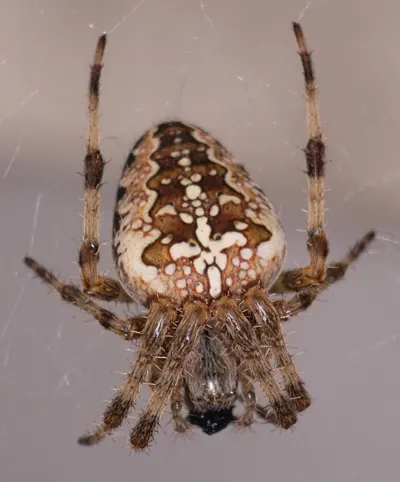
Garden spider
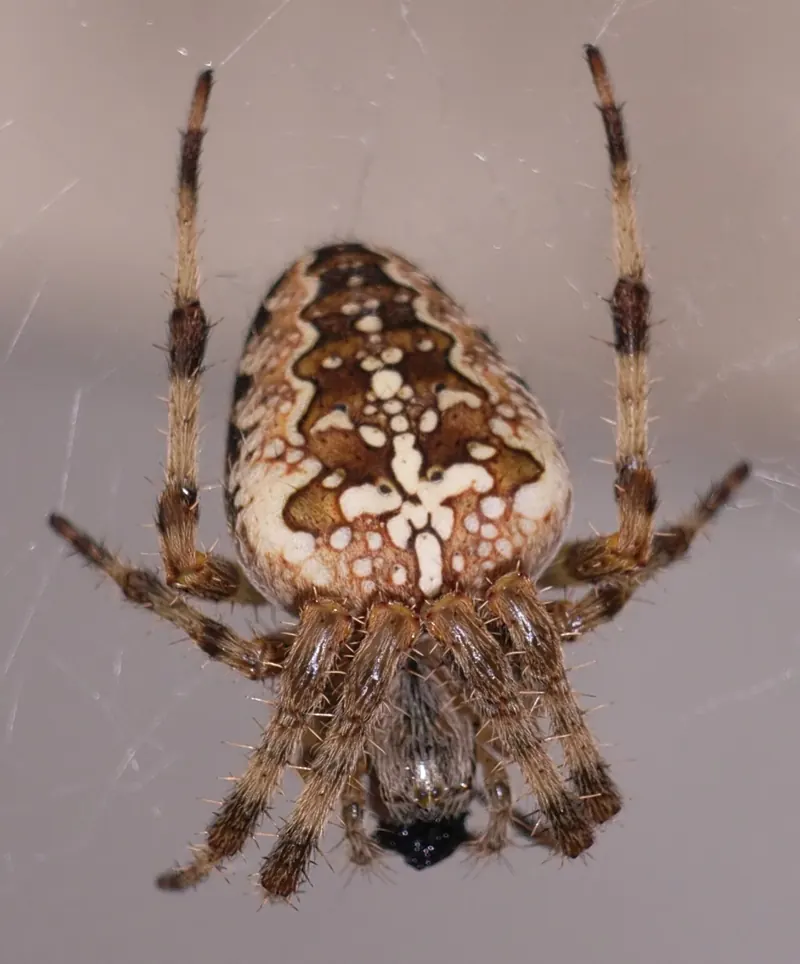
- The garden spider is the most common orb web spider in the UK. Look for the white cross on its back. The Wildlife Trusts: Garden spider
- Garden spiders are 0.9 to 1.8 cm long. Females are twice the size of males. The Wildlife Trusts: Garden spider
- A garden spider waits in the middle of its web to feel the vibrations of a struggling insect, then rushes out to wrap it in silk. The Wildlife Trusts: Garden spider
- The Wildlife Trusts says garden spiders are completely harmless to people. The Wildlife Trusts: Garden spider
- A good summer, with plenty of insects, lets more garden spiders reach their full size. Natural History Museum, London: Invasion of the giant spiders? Not quite
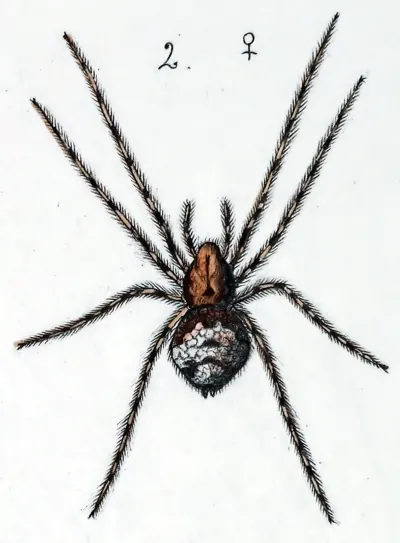
No. 02 · Eratigena atrica
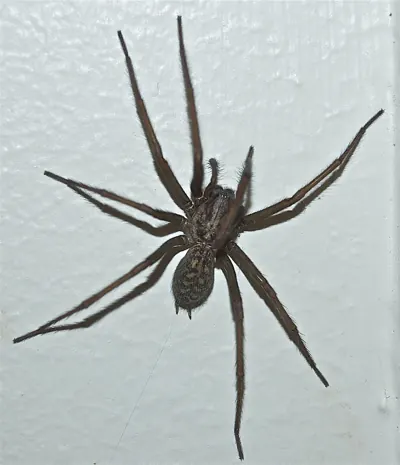
Giant house spider
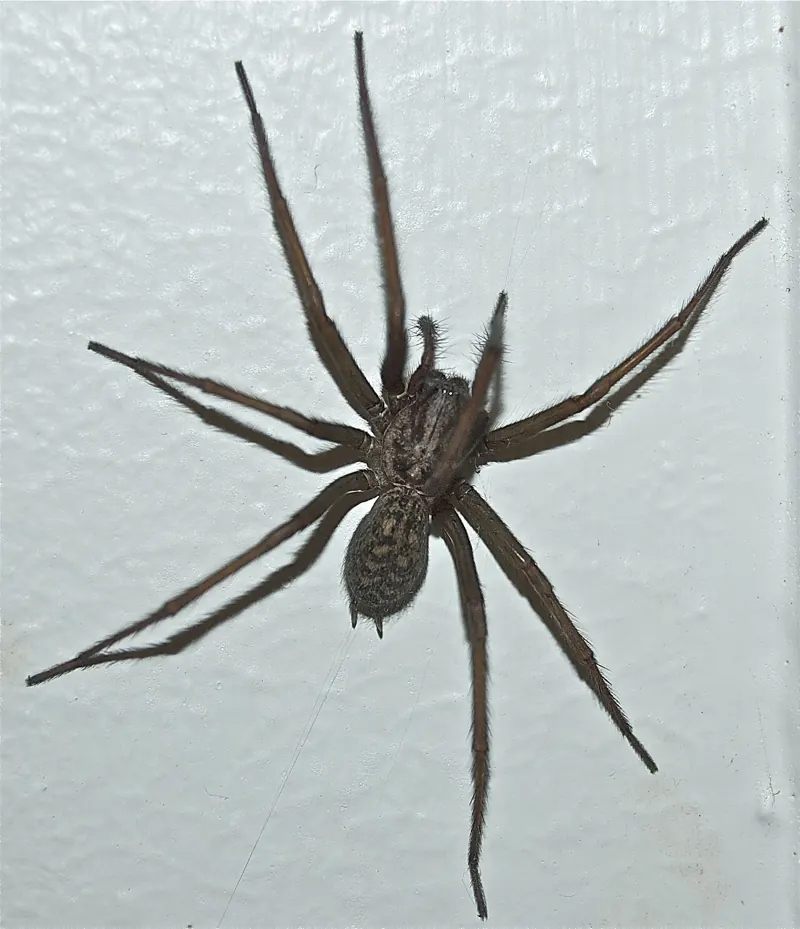
- The giant house spider has a leg span of up to 7.5 cm. The Wildlife Trusts: Giant house spider
- It’s one of our fastest invertebrates, running at up to half a metre a second. The Wildlife Trusts: Cellar spider
- Both males and females can go for months without eating or drinking, and females can live for several years. The Wildlife Trusts: Giant house spider
- Giant house spiders spin sheet-like webs in quiet corners and are most active at night. The Wildlife Trusts: Giant house spider
- In autumn, males of many species reach adulthood and wander about looking for females. That’s why spider sightings always peak in autumn. Natural History Museum, London: Invasion of the giant spiders? Not quite
No. 03 · Tegenaria parietina
Cardinal spider
We haven’t found a public domain or CC0 picture of this one that we can be sure is labelled correctly, so there’s no picture yet.
- The UK’s largest spider is the cardinal spider (Tegenaria parietina). Males have been recorded with a 12 cm leg span. Natural History Museum, London: Spiders in your home
- Six species of house spider are commonly found in British homes, in two closely related groups, Tegenaria and Eratigena. Natural History Museum, London: House spider
- Most British house spiders probably arrived over the last few centuries in cargo from the Mediterranean. In the wild they live in caves and hollow trees. Natural History Museum, London: House spider
No. 04 · Pholcus phalangioides
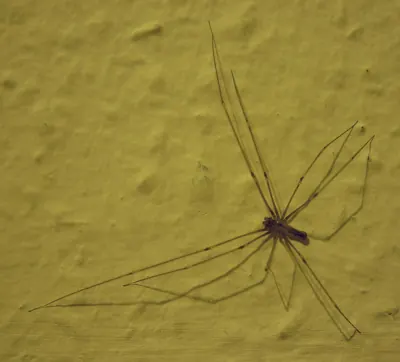
Cellar spider
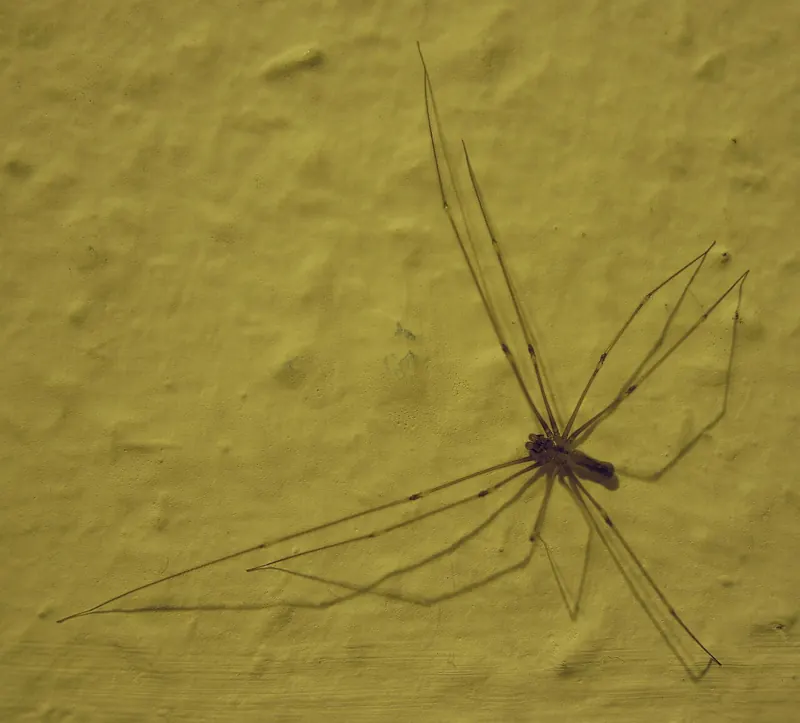
- The cellar spider, or daddy long-legs spider, has a tiny body and very long legs, and lives almost only indoors. The Wildlife Trusts: Cellar spider
- If disturbed, some cellar spiders bounce and vibrate rapidly in their webs. The Wildlife Trusts: Cellar spider
- Cellar spiders also hunt other spiders, including surprisingly large house spiders. The Wildlife Trusts: Cellar spider
- The cellar spider was first recorded in southern Britain in 1864 and has since been found as far north as Shetland. The Wildlife Trusts: Cellar spider · checked 30 Oct 2026
No. 05 · Salticus scenicus
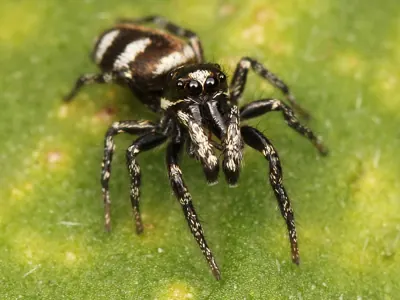
Zebra spider
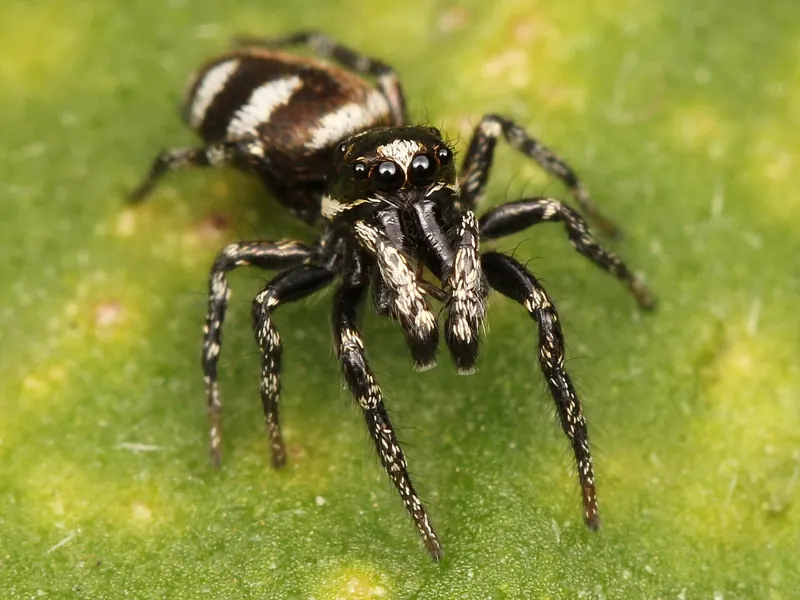
- The zebra spider is a black-and-white striped jumping spider 6 to 7 mm long. It can jump up to 10 cm, over 14 times its own body length. The Wildlife Trusts: Zebra spider
- Male zebra spiders court females with a dance, waving their legs in the air. The Wildlife Trusts: Zebra spider
- The Wildlife Trusts gives more than 5,000 jumping spider species. The Wildlife Trusts: Zebra spider · checked 30 Oct 2026
No. 06 · Zygiella x-notata
Missing sector orb weaver
We haven’t found a public domain or CC0 picture of this one that we can be sure is labelled correctly, so there’s no picture yet.
- The missing sector orb weaver is more of an indoor spider: most UK homes probably have one. Natural History Museum, London: How dangerous are false widow spiders?
- Its web has one slice left out of the circle. Natural History Museum, London: Identifying false widow spiders
- It is one of the few spiders that keep feeding through the winter, if there’s enough food. Natural History Museum, London: How dangerous are false widow spiders?
- Two spiders often mistaken for false widows, the missing sector orb weaver and the lace web spider, are harmless to people. Natural History Museum, London: Identifying false widow spiders
No. 07 · Steatoda nobilis
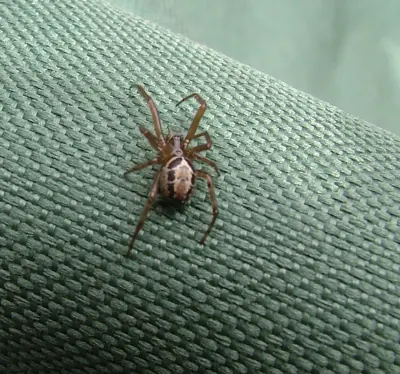
Noble false widow
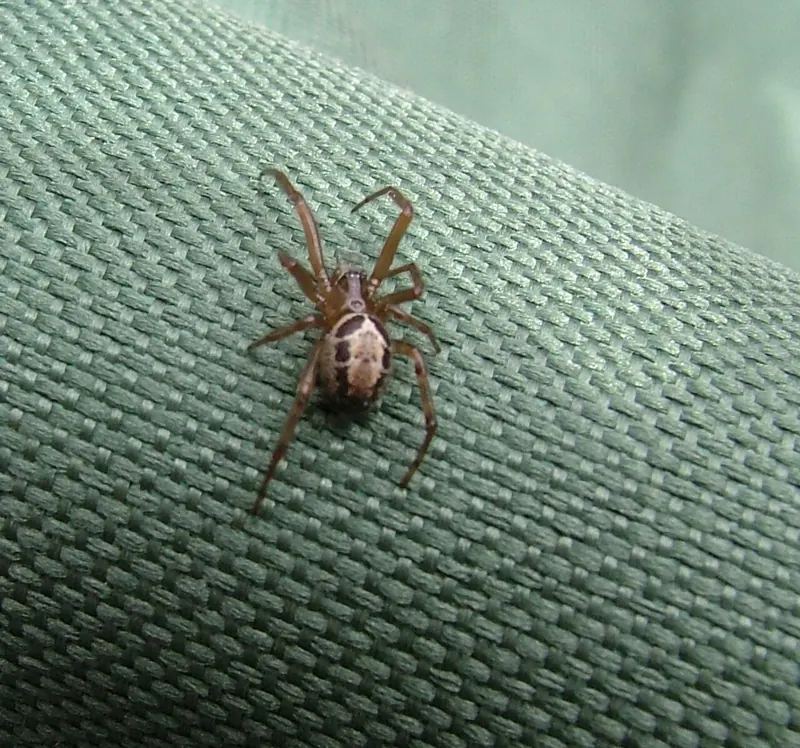
- The noble false widow arrived from the Canary Islands and Madeira in the late 19th century. It is now very common in southern England, mostly around buildings. British Arachnological Society: Noble False Widow Spider bites, the BAS view (23 April 2026) · checked 30 Oct 2026
- In the last 20 years it has spread from a few sites on the south coast to most of lowland England and Wales, with a few records from Scotland. British Arachnological Society: Noble False Widow Spider bites, the BAS view (23 April 2026) · checked 30 Oct 2026
- Noble false widows came over with bananas. Natural History Museum, London: Identifying false widow spiders
- Females are 8.5 to 14 mm long, males 7 to 10 mm. Natural History Museum, London: Identifying false widow spiders
- The chance of being bitten by a noble false widow is very low, and most bites are no worse than a wasp sting. These spiders are not aggressive and only bite when threatened. British Arachnological Society: Noble False Widow Spider bites, the BAS view (23 April 2026)
No. 08 · Argiope bruennichi
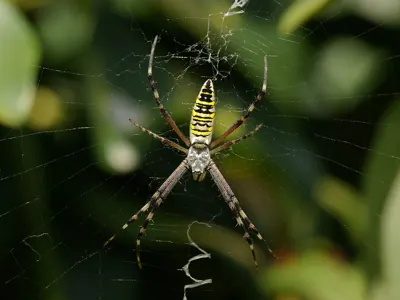
Wasp spider
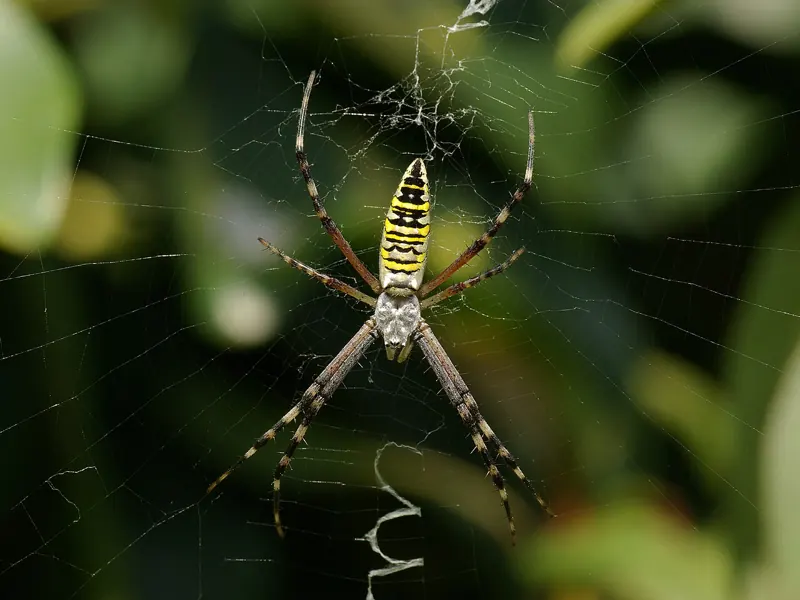
- The wasp spider is striped yellow, black and white, like a wasp. It arrived in the UK from the continent fairly recently and is spreading north. The Wildlife Trusts: Wasp spider · checked 30 Oct 2026
- Its web has a wide white zigzag down the middle, called a stabilimentum. What it’s for is unclear. The Wildlife Trusts: Wasp spider
- Some orb weavers add a thick white zigzag of silk, called a stabilimentum, which may stop birds flying through the web. Britannica: Spider (spiderwebs and classification)
No. 09 · Misumena vatia
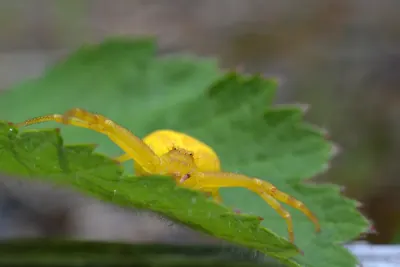
Flower crab spider
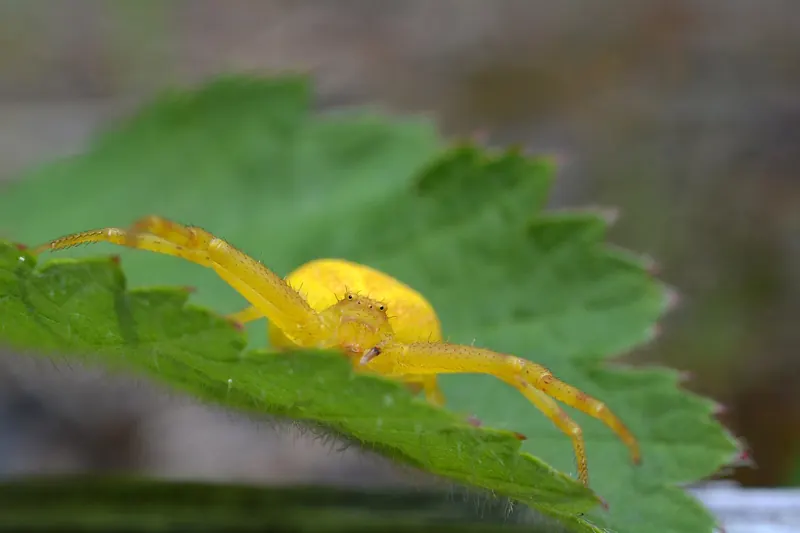
- The flower crab spider doesn’t spin a web. It waits on plants to ambush bees, moths and other insects that come to feed on flowers. The Wildlife Trusts: Flower crab spider
- The female can change colour to match her surroundings; the much smaller male can’t. The Wildlife Trusts: Flower crab spider
- Crab spiders are named for their crab-like front legs and their ability to run sideways. The Wildlife Trusts: Flower crab spider
No. 10 · Pisaura mirabilis
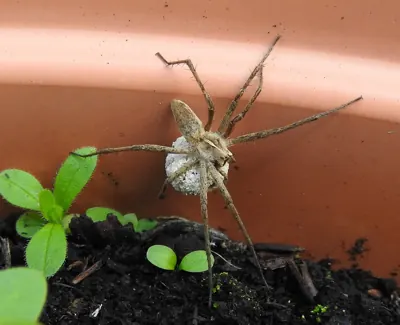
Nursery web spider
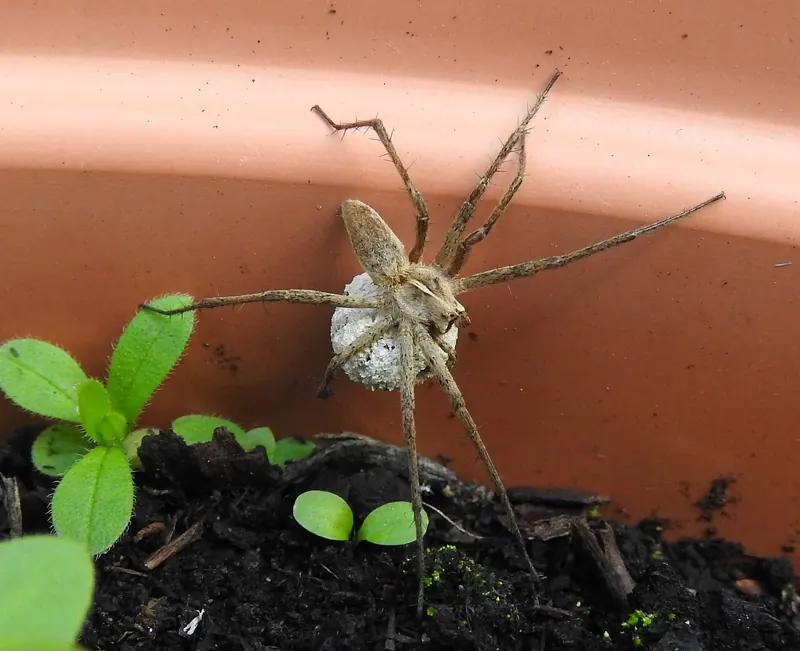
- The female nursery web spider carries her egg sac in her fangs. Before the young hatch she builds a silk tent to shelter them. The Wildlife Trusts: Nursery web spider
- A male nursery web spider brings the female a gift of food, and lies still, pretending to be dead, while she investigates. The Wildlife Trusts: Nursery web spider
No. 11 · Pardosa amentata
Wolf spider
We haven’t found a public domain or CC0 picture of this one that we can be sure is labelled correctly, so there’s no picture yet.
- Wolf spiders hunt on the ground by day, chasing prey down and leaping on it. The Wildlife Trusts: Wolf spider
- A female wolf spider carries her egg sac attached to her spinnerets, then carries the young on her back for a few days. The Wildlife Trusts: Wolf spider
- At night, wolf spiders’ eyes shine brightly in torchlight. Australian Museum: How spiders see the world
No. 12 · Dolomedes fimbriatus
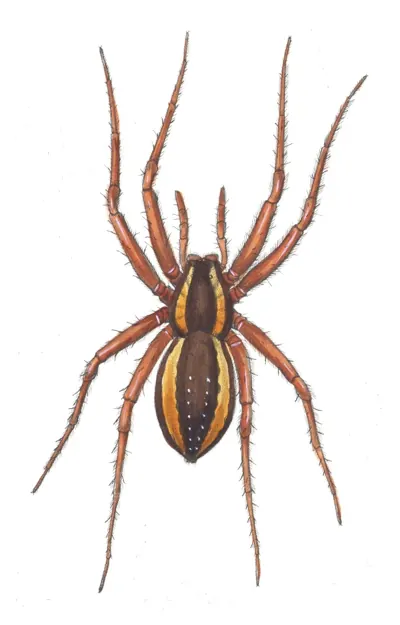
Raft spider
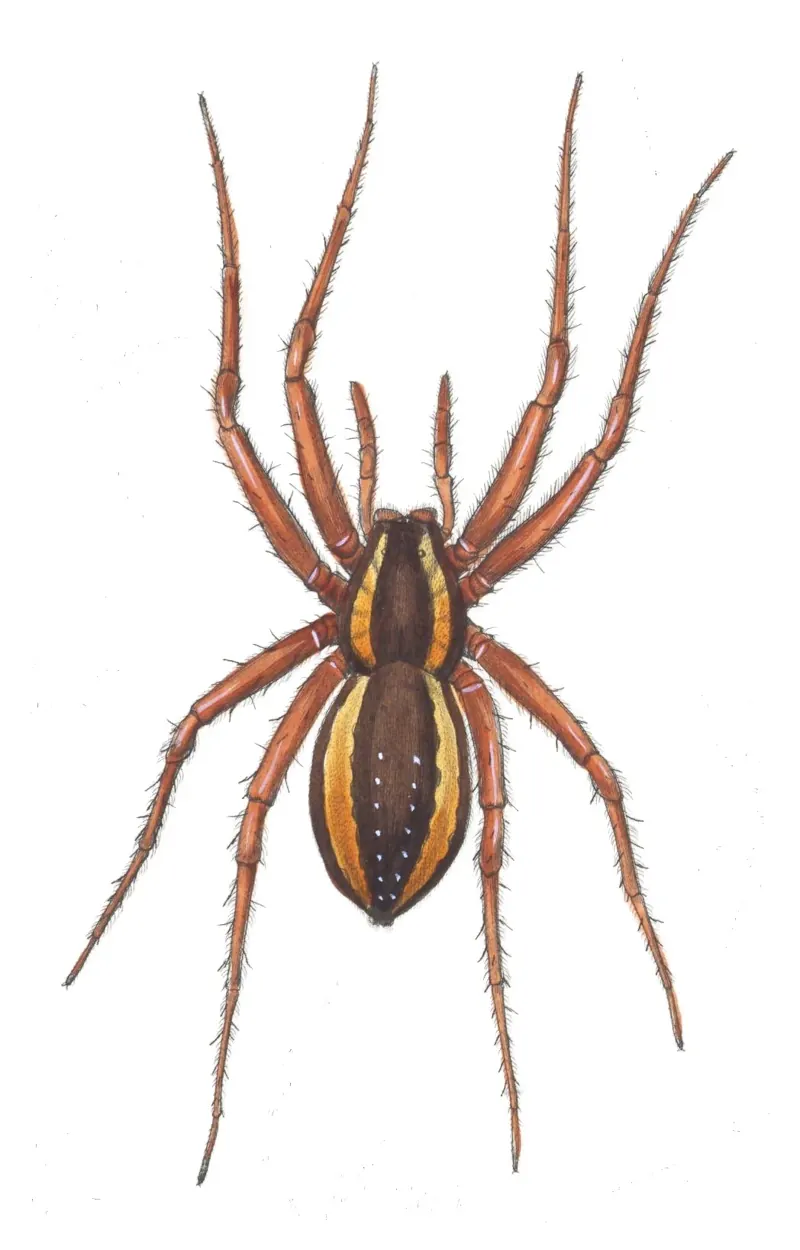
- The raft spider rests its front legs on the water to feel for prey, then runs out across the surface. It even catches tadpoles and small fish. The Wildlife Trusts: Raft spider
- Raft spiders can swim underwater, and often dive when threatened. The Wildlife Trusts: Raft spider
No. 13 · Argyroneta aquatica
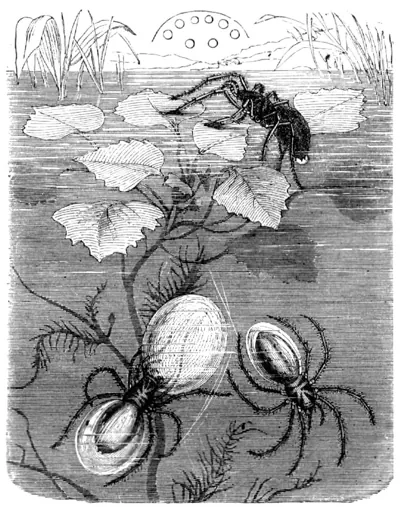
Water spider
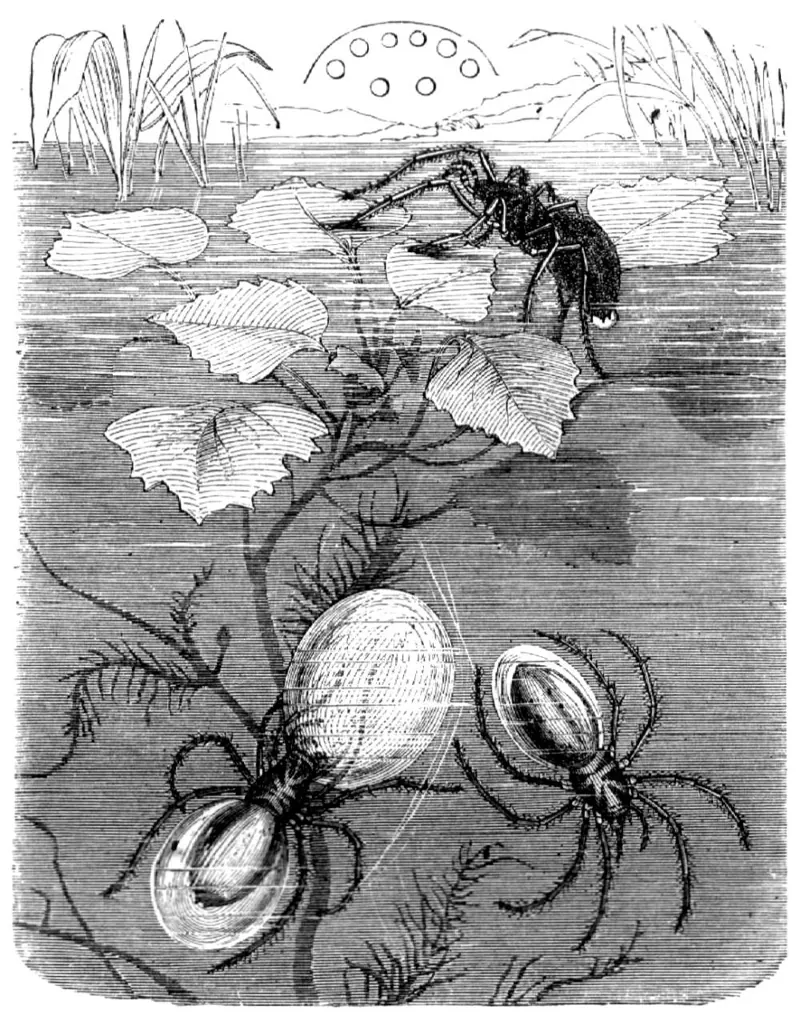
- The water spider is the only spider that spends its life underwater, in a bell-shaped web of silk that it fills with air: a ‘diving bell’. The Wildlife Trusts: Water spider
- It collects air from the surface in the hairs on its body and carries it down to fill the bell. The Wildlife Trusts: Water spider
- Unusually, male water spiders are larger than females. The Wildlife Trusts: Water spider
- One species from Europe and Asia, the water spider, is truly aquatic, living in slow-moving fresh water. Britannica: Spider (size and distribution)
No. 14 · Araniella cucurbitina
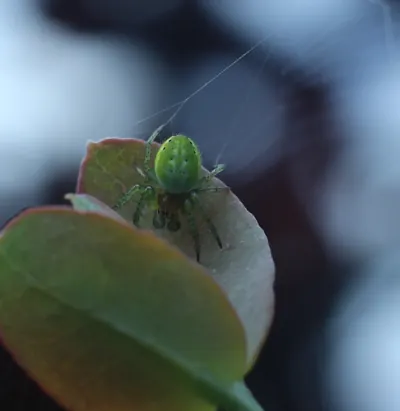
Cucumber spider
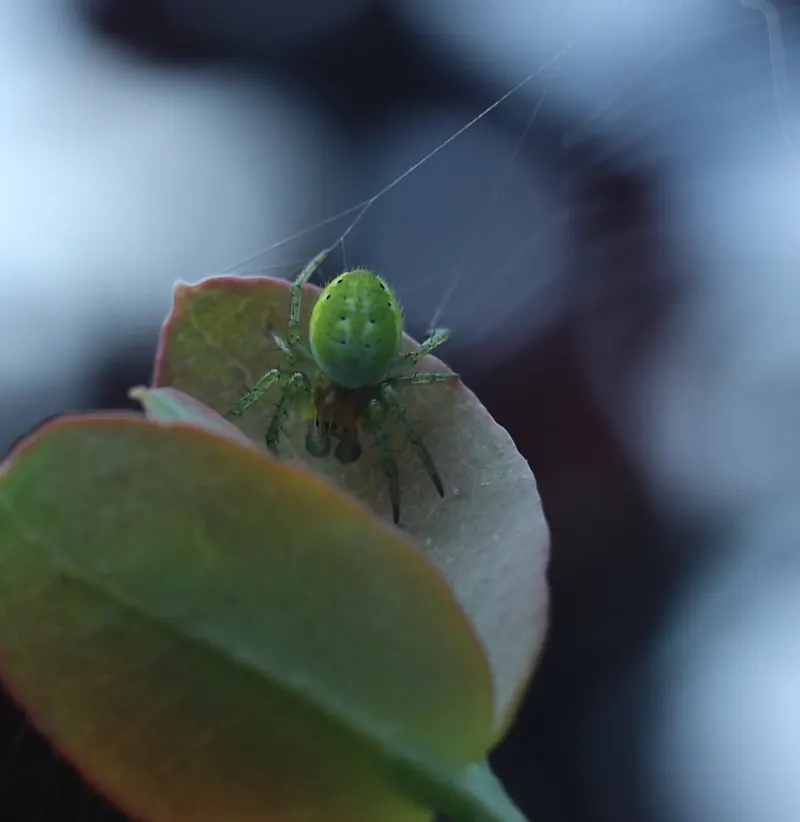
- The cucumber spider has a bright apple-green abdomen with a red spot near the spinnerets. The Wildlife Trusts: Cucumber spider
- It was first described in 1757 by Carl Clerck, a Swedish tax collector and amateur arachnologist. The Wildlife Trusts: Cucumber spider
No. 15 · Ero furcata
Pirate spider
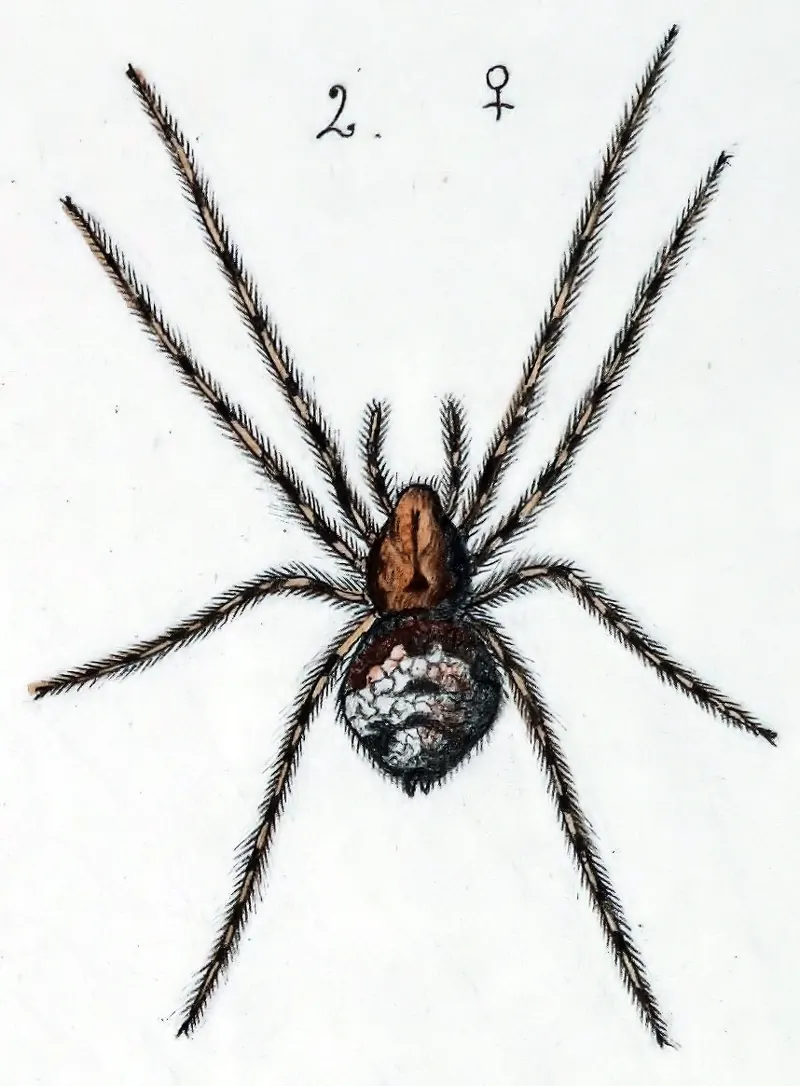
- In October 2024, the Ellan Vannin Invertebrate Group found the pirate spider Ero furcata in the grounds of Government House, Onchan. It specialises in eating other spiders, and is one of two Ero species found on the island so far. Manx Wildlife Trust: Ellan Vannin Invertebrate Group field report, Government House grounds, Onchan, 19 October 2024
No. 16 · Metellina segmentata
An orb-web spider
We haven’t found a public domain or CC0 picture of this one that we can be sure is labelled correctly, so there’s no picture yet.
- Metellina segmentata, an orb-web spider, is very common on the Isle of Man in low plants and shrubs. Manx Wildlife Trust: Ellan Vannin Invertebrate Group field report, Government House grounds, Onchan, 19 October 2024
No. 17 · Erigone atra
A money spider
We haven’t found a public domain or CC0 picture of this one that we can be sure is labelled correctly, so there’s no picture yet.
- The same survey found tiny money spiders such as Erigone atra in leaf litter and dead wood. Manx Wildlife Trust: Ellan Vannin Invertebrate Group field report, Government House grounds, Onchan, 19 October 2024
- The smallest money spiders have a leg span of little more than two millimetres. Natural History Museum, London: Spiders in your home
- About 280 of Britain’s spiders are tiny money spiders. British Arachnological Society factsheet: Essential spider info · checked 30 Oct 2026
- In 2018, University of Bristol scientists showed that money spiders can take off on electric fields like those in the air, even with no wind at all. University of Bristol, 5 July 2018: Spiders go ballooning on electric fields
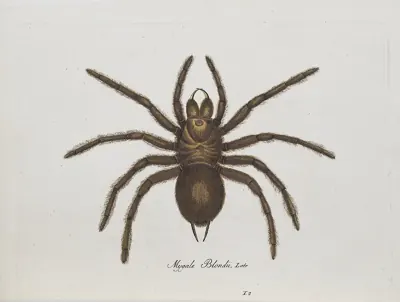
No. 18 · Theraphosa blondi
Goliath birdeater
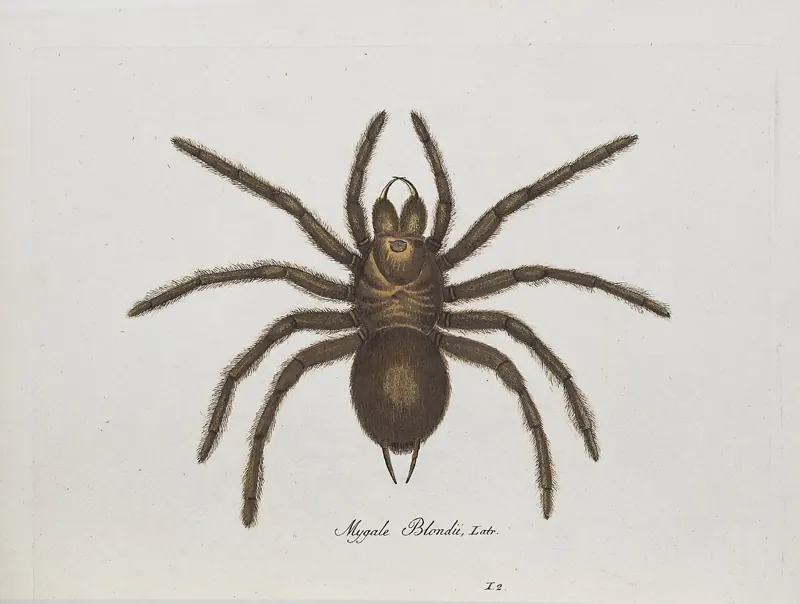
- The goliath birdeater, a tarantula from the Amazon region, is the largest arachnid by mass. Britannica: Spider (size and distribution)
- The Australian Museum gives the goliath spider’s body length as up to 9 cm and its leg span as up to 28 cm. Australian Museum: Spiders
No. 19 · Maratus volans
Peacock spider
We haven’t found a public domain or CC0 picture of this one that we can be sure is labelled correctly, so there’s no picture yet.
- In southern Australia, male peacock spiders (jumping spiders of the genus Maratus) court females by raising flaps on the sides of their brightly coloured abdomen into a white-fringed circle of colour. Australian Museum: Jumping spiders
- Australian jumping spiders range from 3 mm to 12 mm long. Australian Museum: Jumping spiders
No. 20 · Caerostris darwini
Darwin’s bark spider
We haven’t found a public domain or CC0 picture of this one that we can be sure is labelled correctly, so there’s no picture yet.
- Darwin’s bark spider (Caerostris darwini) is a Madagascan orb weaver, named as a new species in 2010. Agnarsson, Kuntner & Blackledge 2010, PLoS ONE (peer-reviewed): Darwin’s bark spider silk
- Darwin’s bark spider of Madagascar hangs orb webs of up to 2.8 square metres over rivers, held by anchor threads up to 25 metres long. Agnarsson, Kuntner & Blackledge 2010, PLoS ONE (peer-reviewed): Darwin’s bark spider silk
- When it was studied in 2010, its silk was the toughest biological material known, more than twice as tough as any spider silk described before. Agnarsson, Kuntner & Blackledge 2010, PLoS ONE (peer-reviewed): Darwin’s bark spider silk · checked 30 Oct 2026
No. 21
Bagheera kiplingi
We haven’t found a public domain or CC0 picture of this one that we can be sure is labelled correctly, so there’s no picture yet.
- Britannica names Bagheera kiplingi as the one exception to spiders being predators: it is nearly vegetarian. Britannica: Spider
- All spiders but one are predators, feeding almost entirely on other small animals with jointed legs, especially insects. The exception, Bagheera kiplingi, is nearly vegetarian. Britannica: Spider
No. 22 · Carparachne aureoflava
Golden wheel spider
We haven’t found a public domain or CC0 picture of this one that we can be sure is labelled correctly, so there’s no picture yet.
- The golden wheel spider lives in the Namib Desert. Britannica: Spider (size and distribution)
- The golden wheel spider of Namibia escapes danger by cartwheeling down sand dunes, spinning 44 times a second. Britannica: Spider (size and distribution)
No. 23 · Deinopis
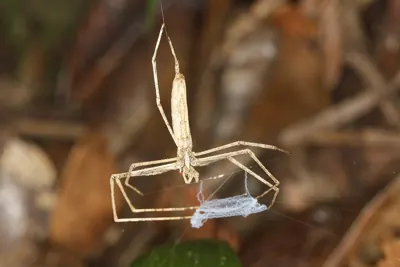
Ogre-faced spider
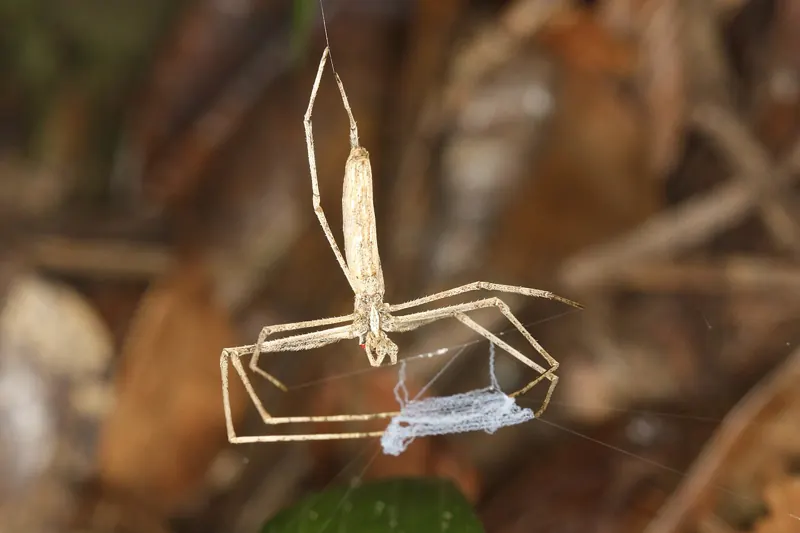
- Ogre-faced spiders are net-casting spiders: they hold a little net between their front legs and throw it over insects at night. Britannica: Spider (spiderwebs and classification)
- Ogre-faced spiders (Deinopis) have two hugely enlarged rear eyes that work like searchlights for seeing at night. Australian Museum: How spiders see the world
- Net-casting spiders hold a small web between their four front legs and throw it over passing insects at night. Britannica: Spider (spiderwebs and classification)
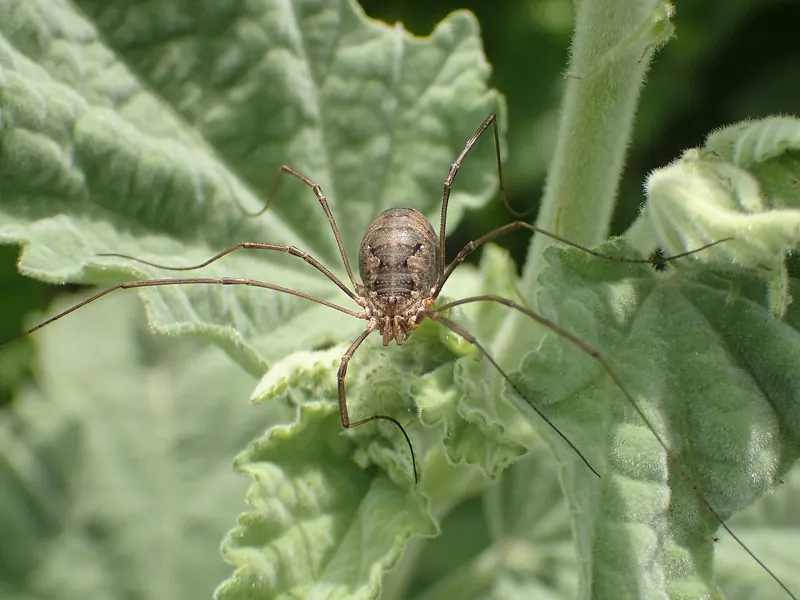
Not a spider
Harvestmen look spidery but aren’t spiders. They are arachnids with a small round body and no ‘waist’, and about 25 kinds live in the UK. The Wildlife Trusts: Common harvestman Harvestmen don’t spin silk or make venom, and a lost leg doesn’t grow back. The Wildlife Trusts: Common harvestman
‘Daddy-longlegs’ can mean a harvestman, a crane fly (an insect) or a cellar spider, depending on who’s talking. Burke Museum, Seattle: Spider myths (by its spider curator)