Egg sac to adult
Spiders hatch from eggs wrapped in silk, look like small adults from the start, and moult as they grow.
Eggs and egg sacs
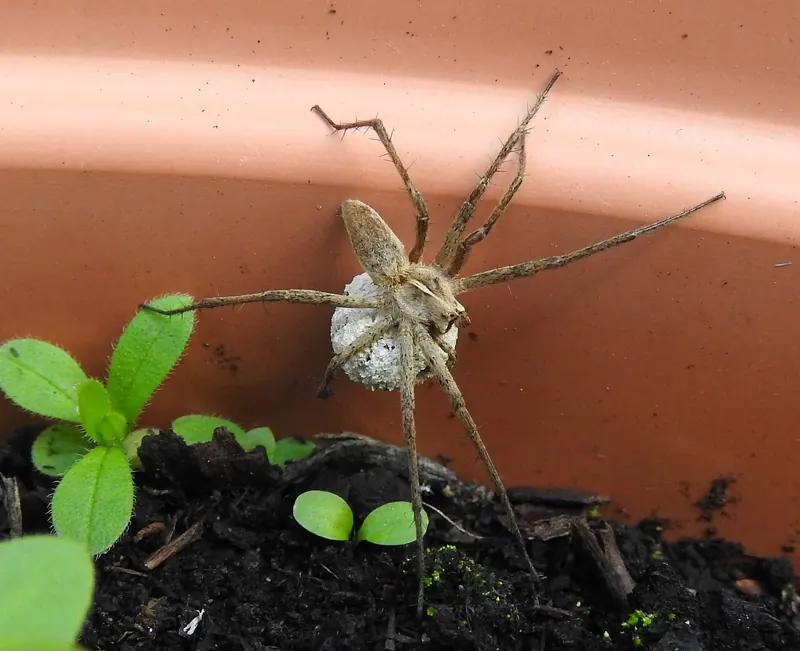
Spiders lay eggs. Females wrap them in silk egg sacs, which may hold hundreds of eggs. Australian Museum: Spiders Some mothers leave their egg sac straight away; others guard it until the young come out, and some carry it about with them. British Arachnological Society factsheet: Essential spider info
The female nursery web spider carries her egg sac in her fangs. Before the young hatch she builds a silk tent to shelter them. The Wildlife Trusts: Nursery web spider A female wolf spider carries her egg sac attached to her spinnerets, then carries the young on her back for a few days. The Wildlife Trusts: Wolf spider
In a few British spiders the mother even feeds her young for a while on food she brings back up, as many birds do. British Arachnological Society factsheet: Essential spider info
Spiderlings
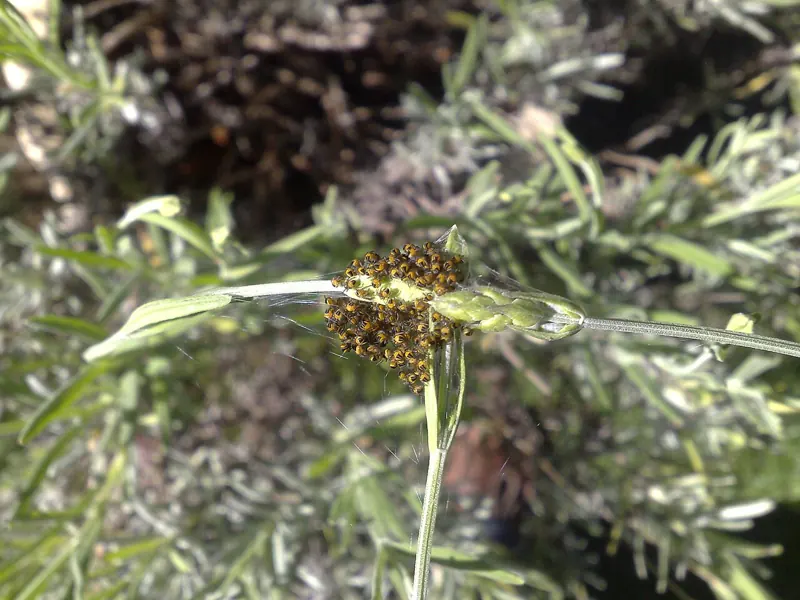
Spiderlings cut their way out of the egg sac with their fangs. Australian Museum: Spiders After a few days they spread out to find food (and to avoid being eaten by hungry brothers and sisters). Australian Museum: Spiders
Newly hatched spiders look like small versions of their parents. British Arachnological Society factsheet: Essential spider info
Flying without wings
Small spiders and young ones can let out silk threads that catch the wind and carry them long distances. This is called ballooning. Britannica: Spider (size and distribution) Ballooning spiders drift at anything from 3 metres or less to more than 800 metres up. Britannica: Spider (size and distribution)
In 2018, University of Bristol scientists showed that money spiders can take off on electric fields like those in the air, even with no wind at all. University of Bristol, 5 July 2018: Spiders go ballooning on electric fields Charles Darwin wondered how hundreds of spiders landed on HMS Beagle far out at sea on a calm day. University of Bristol, 5 July 2018: Spiders go ballooning on electric fields
Growing up
Spiders grow by moulting: a new, larger skin forms under the old one, which splits so the spider can climb out. Australian Museum: Spiders The new skin is soft, so most spiders keep still until it hardens. Australian Museum: Spiders
Spiders also have a pair of leg-like pedipalps. In most species, the tips swell up like little boxing gloves as males become nearly full grown. British Arachnological Society factsheet: Essential spider info
Finding a mate
Courtship can be long or short. In some species it includes dancing or giving gifts. British Arachnological Society factsheet: Essential spider info A male nursery web spider brings the female a gift of food, and lies still, pretending to be dead, while she investigates. The Wildlife Trusts: Nursery web spider
Male zebra spiders court females with a dance, waving their legs in the air. The Wildlife Trusts: Zebra spider In southern Australia, male peacock spiders (jumping spiders of the genus Maratus) court females by raising flaps on the sides of their brightly coloured abdomen into a white-fringed circle of colour. Australian Museum: Jumping spiders
Why you see more in autumn
In autumn, males of many species reach adulthood and wander about looking for females. That’s why spider sightings always peak in autumn. Natural History Museum, London: Invasion of the giant spiders? Not quite Spiders aren’t getting bigger, and there aren’t really more of them: we just see more when warm autumns keep our windows and doors open. Natural History Museum, London: Invasion of the giant spiders? Not quite
How long they live
Many spiders live only a few months as adults, but female large house spiders can live for a couple of years. British Arachnological Society factsheet: Essential spider info Both males and females can go for months without eating or drinking, and females can live for several years. The Wildlife Trusts: Giant house spider
Next: hunters & tricksters →