Silk for everything
Every spider makes silk, but only about half build webs to catch food. The rest use it for egg sacs, homes, draglines and travel.
All spiders make silk, but only about half of all spider species build webs to catch prey. Britannica: Spider (spiderwebs and classification) Spiders are the only animals that use silk in almost every part of their daily lives: to protect their young, catch food, make homes and get about. Australian Museum: Silk, the spider’s success story
Where silk comes from
Ten kinds of silk gland are known in spiders, and one species can have up to eight, each making silk for a different job. Australian Museum: Silk, the spider’s success story The biggest spigot on a front spinneret makes the spider’s strong main line, called the dragline. Australian Museum: Silk, the spider’s success story
A strand of spider silk long enough to go all the way round the Earth would weigh less than 500 grams. The Wildlife Trusts: Garden spider
Orb webs
To start an orb web, a spider lets out a silk thread for the wind to carry. Once it catches on something, the spider fixes it and crosses the new bridge. Britannica: Spider (spiderwebs and classification) An orb weaver takes only about an hour to weave the spokes and spiral of its web. Britannica: Spider (spiderwebs and classification)
Most orb webs are rebuilt every day. Britannica: Spider (spiderwebs and classification) An orb web works like an air filter, trapping weak-flying insects that can’t see the fine silk. Britannica: Spider (spiderwebs and classification)
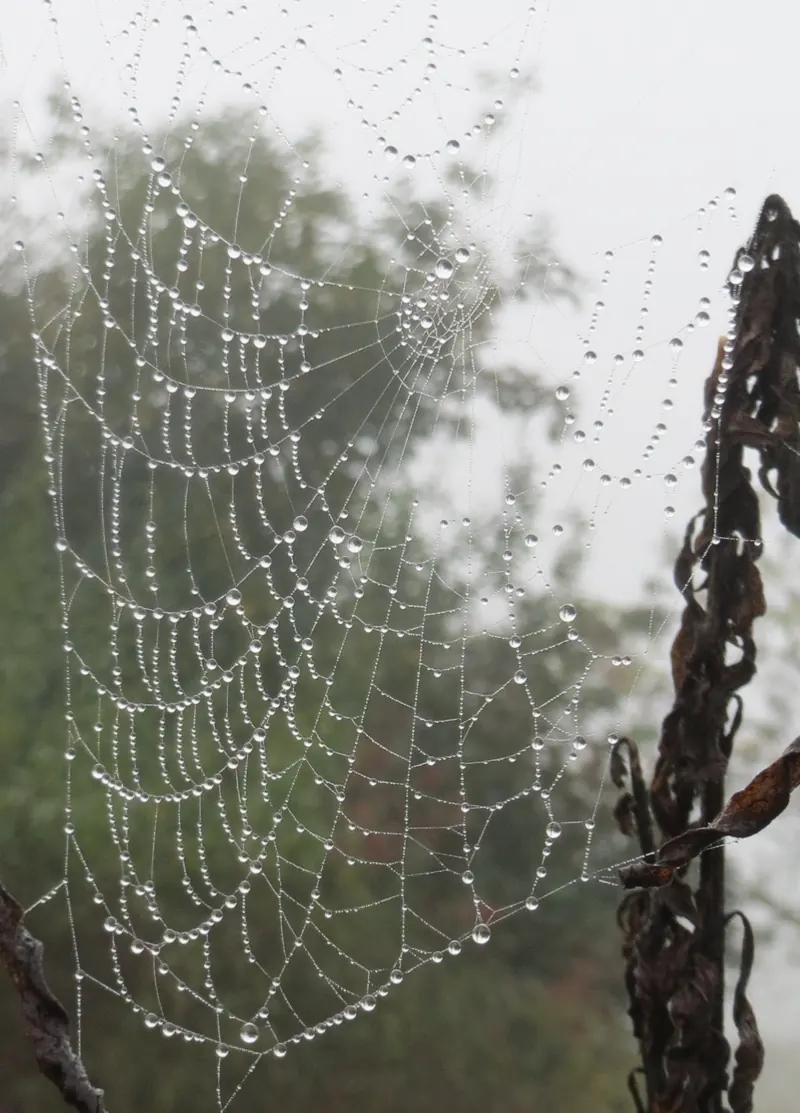
In Britain, orb webs are built by four spider families. The classic one is made by the garden spider. British Arachnological Society factsheet: Essential spider info Many people love seeing frosted orb webs on a winter morning. British Arachnological Society factsheet: Essential spider info
Catching dinner
A garden spider waits in the middle of its web to feel the vibrations of a struggling insect, then rushes out to wrap it in silk. The Wildlife Trusts: Garden spider Spiders usually wrap a captured insect in silk, turning it as if on a spit, before biting it. Britannica: Spider (spiderwebs and classification)
Moths can slip out of webs by shedding wing scales, so spiders bite moths first and wrap them afterwards. Britannica: Spider (spiderwebs and classification)
Zigzags
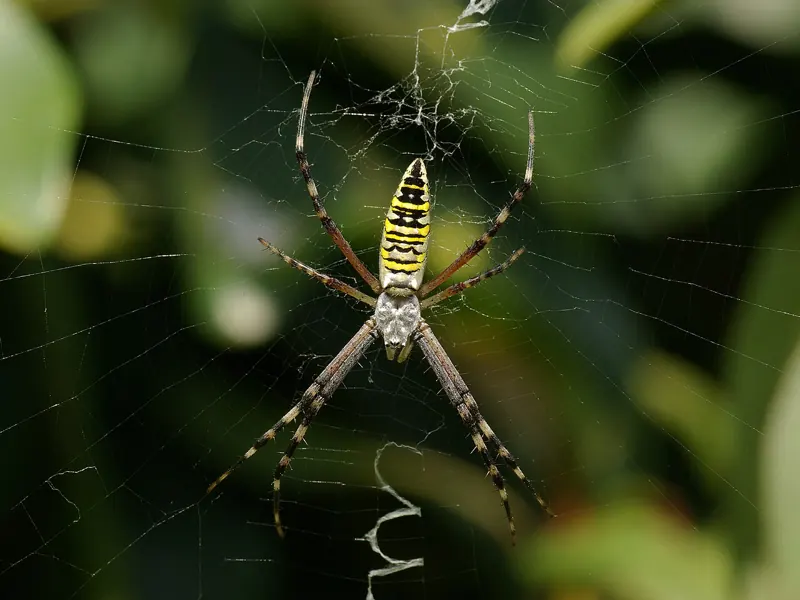
Some orb weavers add a thick white zigzag of silk, called a stabilimentum, which may stop birds flying through the web. Britannica: Spider (spiderwebs and classification) Its web has a wide white zigzag down the middle, called a stabilimentum. What it’s for is unclear. The Wildlife Trusts: Wasp spider
Sheets, nets and bells
House spiders build a silk sheet that funnels into a retreat at the back. Natural History Museum, London: House spider Giant house spiders spin sheet-like webs in quiet corners and are most active at night. The Wildlife Trusts: Giant house spider
Net-casting spiders hold a small web between their four front legs and throw it over passing insects at night. Britannica: Spider (spiderwebs and classification) Ogre-faced spiders are net-casting spiders: they hold a little net between their front legs and throw it over insects at night. Britannica: Spider (spiderwebs and classification)
The water spider is the only spider that spends its life underwater, in a bell-shaped web of silk that it fills with air: a ‘diving bell’. The Wildlife Trusts: Water spider
Its web has one slice left out of the circle. Natural History Museum, London: Identifying false widow spiders
Webs in a crowd
Some tropical spiders live together in huge shared webs of hundreds, cooperating to build and repair them. Britannica: Spider (spiderwebs and classification)
The toughest silk
Darwin’s bark spider of Madagascar hangs orb webs of up to 2.8 square metres over rivers, held by anchor threads up to 25 metres long. Agnarsson, Kuntner & Blackledge 2010, PLoS ONE (peer-reviewed): Darwin’s bark spider silk When it was studied in 2010, its silk was the toughest biological material known, more than twice as tough as any spider silk described before. Agnarsson, Kuntner & Blackledge 2010, PLoS ONE (peer-reviewed): Darwin’s bark spider silk · checked 30 Oct 2026
Useful to people
Spider venom and silk are used in research, in insect-specific pest control and in fibre technology. Australian Museum: Spiders
Next: egg sac to adult →