Spider bites: what the experts say
Almost every spider has venom, because that’s how it catches food. Here’s what the Natural History Museum, the British Arachnological Society and other museums say about spiders and people in Britain.
We quote what museums and the British Arachnological Society say, each with a link. It’s general information about spiders, not advice about any particular bite.
Venom is for prey
Practically all spiders have venom. Burke Museum, Seattle: Spider myths (by its spider curator) Spider venom works on the nerves of insects and other prey, stopping them moving. It also helps break down the prey’s body. Australian Museum: Prey capture and feeding
All spiders can bite: that’s how most of them subdue their prey. But only a small number have fangs strong enough to pierce human skin. Natural History Museum, London: Spiders in your home
Bites are rare
Spider bites are quite rare, so there’s generally no cause for concern if you see spiders at home. Natural History Museum, London: Spiders in your home Of the 650 or so species of spider in the UK, only about 12 have been recorded biting people, and only two or three have given a significant or unpleasant bite. Natural History Museum, London: Spiders in your home · checked 30 Oct 2026
The British Arachnological Society says that of 680 spider species in Britain, only a handful can nip through human skin. British Arachnological Society: Noble False Widow Spider bites, the BAS view (23 April 2026) · checked 30 Oct 2026 Bites usually happen only when a spider is defending itself. Few spiders have fangs that can get through our skin, or any inclination to try. British Arachnological Society: Spider bites
Spider bites are occasionally painful and, in rare cases elsewhere in the world, dangerous, but not in the UK. British Arachnological Society: Spider bites The British Arachnological Society’s advice: respect spiders, but don’t be afraid of them. British Arachnological Society: Spider bites
False widows
Six false widow species live permanently in the UK. Natural History Museum, London: How dangerous are false widow spiders? · checked 30 Oct 2026 The noble false widow arrived from the Canary Islands and Madeira in the late 19th century. It is now very common in southern England, mostly around buildings. British Arachnological Society: Noble False Widow Spider bites, the BAS view (23 April 2026) · checked 30 Oct 2026
False widows bite only when trapped or squashed, often in clothing. Natural History Museum, London: Invasion of the giant spiders? Not quite The chance of being bitten by a noble false widow is very low, and most bites are no worse than a wasp sting. These spiders are not aggressive and only bite when threatened. British Arachnological Society: Noble False Widow Spider bites, the BAS view (23 April 2026)
A false widow bite usually just hurts where it happened, ordinarily for between one and 12 hours. Natural History Museum, London: How dangerous are false widow spiders? The Natural History Museum says all false widows are likely to do is give a small and relatively harmless bite. Natural History Museum, London: Identifying false widow spiders
Stuart Hine, who spent many years identifying spiders for the Natural History Museum, has been bitten by false widows three times. Each time he felt ‘a slight sting and a little numbness’. Natural History Museum, London: Invasion of the giant spiders? Not quite
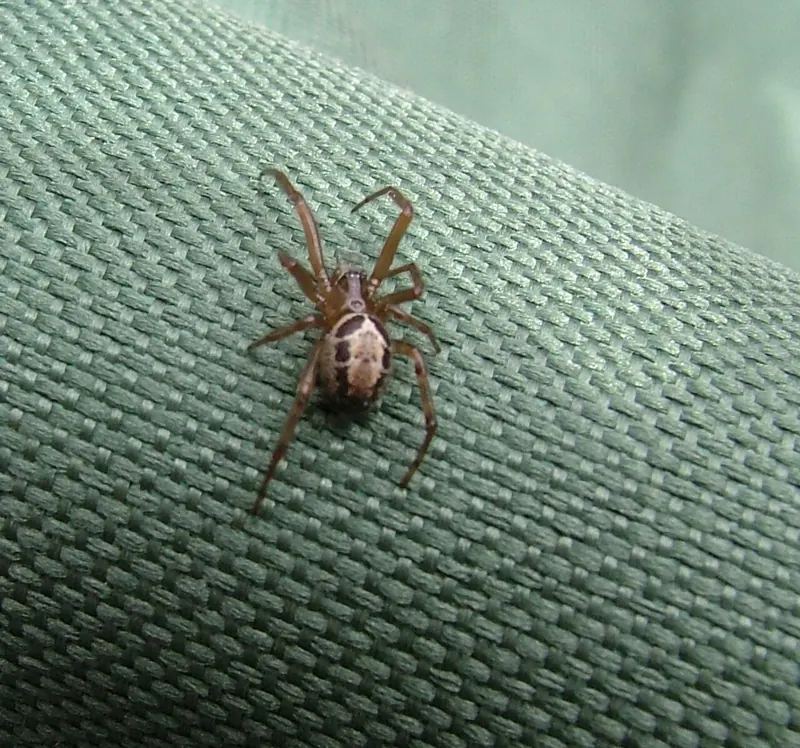
Was it really a spider?
In many reported ‘false widow bites’, a spider is assumed rather than proven. British Arachnological Society: Noble False Widow Spider bites, the BAS view (23 April 2026)
The Burke Museum in Seattle, writing about North America, adds: Real spider fang marks in human skin are hardly ever visible to the naked eye. Burke Museum, Seattle: Spider myths (by its spider curator) Most mystery bumps and sores blamed on spiders have other causes. Burke Museum, Seattle: Spider myths (by its spider curator)
House spiders and lookalikes
House spiders can bite if picked up, but the effect of their venom is small. Natural History Museum, London: Invasion of the giant spiders? Not quite Two spiders often mistaken for false widows, the missing sector orb weaver and the lace web spider, are harmless to people. Natural History Museum, London: Identifying false widow spiders
Spiders from abroad
Spiders from other countries are occasionally found in imported fruit such as grapes or bananas. The Natural History Museum’s identification service can identify them from a photo. Natural History Museum, London: Spiders in your home Spiders can’t lay eggs inside the skin of a ripe banana. Burke Museum, Seattle: Spider myths (by its spider curator)
Sharing a house
If you pick up a spider, remember it is delicate, and handle it with care and respect. Natural History Museum, London: Spiders in your home Want a spider out of the house? Catch it under a glass, slide a card underneath and put it outside. The Wildlife Trusts: False widow spider
‘The kindest thing anyone can do is let them outside,’ says Stuart Hine of the Natural History Museum. Natural History Museum, London: Invasion of the giant spiders? Not quite Wasps and bees sting too, Stuart Hine points out, but we don’t fear them in the same way. Natural History Museum, London: Invasion of the giant spiders? Not quite
Few spiders can live comfortably in modern centrally heated homes. Most would rather be helped back outside. Natural History Museum, London: Spiders in your home No one has yet invented a device that keeps spiders away. Closing windows and blocking gaps works better. Natural History Museum, London: House spider
Next: the species →